
Problems & repairs
Reducing sound through ordinary internal doors
Start with the sound route, not a heavier door on a shopping list.
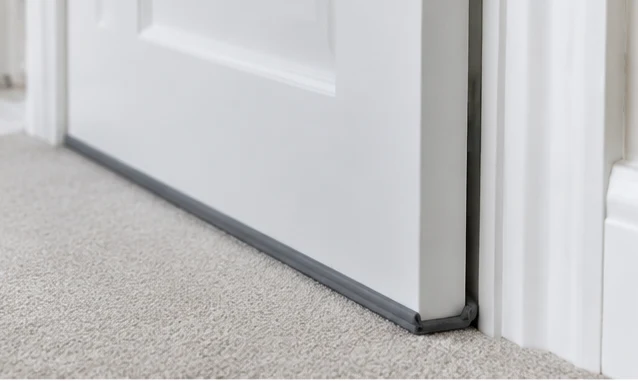
A closed bedroom or study door should give some separation from the rest of the house, yet conversations can remain surprisingly clear. The tempting answer is a heavier replacement. Sometimes that helps, but sound can also travel around the edges, beneath the leaf or through adjoining construction. This guide concerns ordinary internal doors and realistic household improvements, not a tested acoustic doorset specification. The useful first step is to identify which route matters most, then decide what can be improved without making the doorway awkward or disrupting the home's ventilation.
Separate voices from closing noise
Write down what is bothering you before choosing hardware. Speech and television passing from one room to another are different from a latch snapping shut or a door banging against its stops. Softening the closing action may make evenings calmer without materially changing what can be heard through the closed opening.
Compare the same familiar sound with the door open and closed, keeping its position and volume unchanged. Listen from normal sitting positions as well as near the opening. This is a household comparison, not a performance test. If closing the door barely changes the disturbance, investigate adjoining walls, open stairways and other routes before committing to a replacement leaf. Bass from speakers or vibration from equipment may need attention at the source rather than at the door.
Check the perimeter before buying seals
With the door stationary and nobody operating it, inspect the head and both sides for visibly uneven gaps. Notice whether the latch holds the leaf against the frame stops or allows it to rattle. A twisted lining or dropped hinge can leave one corner well away from its stop even when the handle appears to work normally.
Correcting the hanging and latch alignment comes before adding a seal. Otherwise, a thick strip may disguise one gap while making the opposite edge difficult to close. Do not pack the opening indiscriminately or force the latch to compress unsuitable material. The aim is a consistent contact line using compatible components, not a door that requires a shoulder push. Existing rubbing and binding should be diagnosed separately.
Treat edge seals as fitted components
Purpose-made perimeter seals vary in profile, fixing method and the clearance they need. Choose against the actual frame detail and the seal manufacturer's instructions. A compressible profile must meet the leaf consistently; a strip attached where the door never touches it will achieve little. Surface-mounted options can also change the visible frame line.
Ask how corners will meet, whether the latch needs adjustment and whether the seal can be renewed without damaging decoration. Very stiff seals can make a light door unpleasant to operate. Brush strips and cushioning pads have different jobs, so do not assume that anything sold for draughts is an equivalent sound-control detail. Retain the packaging and product reference: replacement sections are easier to match when the original profile is known.
Do not seal an airflow route blindly
The clearance beneath an internal door may be part of the ventilation path between rooms. Blocking it can affect the movement of air towards extract points. In England, Approved Document F includes guidance on air transfer through dwellings; the applicable arrangements depend on the building and ventilation system. That is a reason to check the design, not to apply a single gap rule to every home.
A bottom seal therefore needs more thought than sticking foam along the head. Some products sweep across the floor; others lower only as the door closes. Floor unevenness, rugs and the available fixing area all affect suitability. If the undercut provides necessary airflow, ask a ventilation specialist about an appropriate alternative before closing it. Do not cover an existing transfer grille to pursue quieter speech.
Know when a different leaf is worthwhile
A denser leaf can be a sensible part of an improvement where the existing door is lightweight and poorly suited to the room. It is not a standalone promise: the perimeter, bottom detail and surrounding construction still matter. Look for useful product information rather than assuming that a decorative style or substantial handle indicates sound performance.
Before ordering, check the existing lining, hinge positions, supporting timber, handle preparation and permitted trimming. A replacement's weight must suit the hinges and their fixings. Veneered and moulded products can have tightly defined cutting allowances, making the opening survey important. Avoid improvising added panels or heavy coverings on an existing leaf: their effect is uncertain and they introduce weight that the original hanging arrangement may not have been designed to carry.
Agree what success will sound like
Set a practical aim such as making ordinary conversation less intrusive during a call, rather than expecting silence from a busy hallway. Test the completed work using the original sound and listening positions. Check the handle, latch and full opening arc as carefully as the perceived improvement. An uncomfortable door is unlikely to remain closed when it is needed.
If sound still seems to come from everywhere, stop adding strips. The limiting route may be a lightweight wall, ceiling void or another open doorway. A broader acoustic assessment can be more useful than repeated door purchases. For everyday use, moving a television away from the shared wall, lowering speaker output and agreeing quiet periods may complement the physical work without altering the doorway further.
Questions we're asked about this
Plan a quieter internal doorway
Share photographs of the closed door, its frame and floor clearance, together with the noise you want to reduce, to discuss the appropriate fitting work.
Get a free quote
Reply within 24 hours - No obligation