
Problems & repairs
Repairing stripped hinge screw holes in timber doors
Restore a sound fixing zone rather than hiding a loose screw.
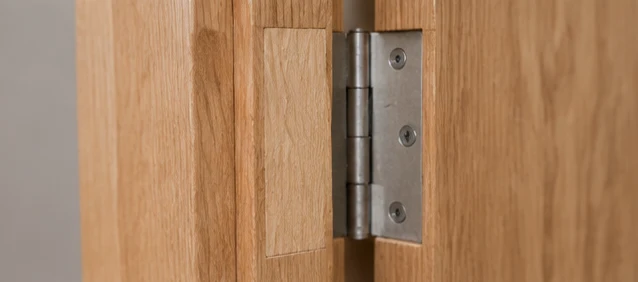
A hinge screw that turns without tightening has lost its grip, but the best repair depends on what remains around the hole. One worn hole in sound timber is not the same problem as a split lining, a damaged hinge recess or a hollow door edge with no adequate fixing block. This guide concerns local fixing repairs to ordinary internal timber doors and linings, once the hinge location is known to be correct. It is not a general door alignment diagnosis.
Establish what the screw is meant to grip
Identify whether the worn hole is in the door edge or the lining, and what construction surrounds it. A solid timber member offers different repair options from a thin skin over a cavity. Some doors have limited timber blocking at the hinges; drilling farther may leave that block rather than find more useful material. Check the door manufacturer's information where its construction is uncertain.
Look at the hinge leaf and the other holes before choosing a remedy. A bent hinge, oversized countersink or torn recess can prevent a tight screw from producing a secure seating. If several holes are damaged, assess the pocket as a whole rather than treating each as an isolated defect. The target is a stable hinge connected to sound material, with the original geometry maintained. A screw that feels tight is only one part of that outcome.
Unload the hinge before disturbing its fixings
Support the door securely before removing screws or lifting a hinge leaf. Door weight is difficult to control when a remaining fixing releases unexpectedly, especially with a solid core leaf. If safe handling is uncertain, remove and repair the assembly using suitable assistance or equipment. Keep fingers away from closing hinge gaps and do not leave the door hanging from a compromised fixing arrangement.
Record the hinge position and recess depth before altering the timber. Marking those references helps avoid shifting the pivot line while repairing the holes. Protect adjacent finishes and check for concealed services before any deeper drilling into a lining or surrounding structure. A local repair should remain local: do not investigate what lies behind the frame by blindly driving a long screw into it. Uncertain construction is a reason to assess the background, not to apply more force.
Use an insert only where sound timber surrounds it
For an isolated worn hole, a properly fitted timber insert can provide a fresh fixing zone. The damaged fibres are removed in a controlled way and a sound insert is bonded into suitable surrounding timber. Once the adhesive has cured as specified, the new pilot hole is set out for the hinge screw. The insert should not simply float in a pocket of weak filler.
Fit, grain arrangement, adhesive choice and available section all influence the result. A larger face grain timber repair may be preferable where screw positions are close together or the small insert would leave inadequate material around the new pilot. Avoid treating loose matchsticks or a handful of splinters as equivalent to a planned repair. They may make a screw bite temporarily without establishing a predictable fixing zone. The method has to suit the actual damage and the load carried by that hinge.
Know when the entire hinge pocket needs repair
If the recess is split, crushed or riddled with previous holes, individual plugs may leave too little continuous timber. A shaped timber patch can replace the damaged zone, after which the hinge recess and pilot holes are formed again in the correct positions. That is more involved than filling a hole and needs enough sound surrounding material for the repair connection.
Do not cut an increasingly large pocket without considering the remaining section of the lining or door stile. Widespread decay, a moving lining or an inadequate hinge block may require replacement of the affected component instead. Adhesive cure times and preparation requirements remain important even when the patch feels mechanically tight. Keep the door unloaded until the selected repair system permits loading. Paint, caulk and ordinary decorative filler are finishing materials, not substitutes for the timber and connections carrying the hinge.
Treat longer screws and resins as specific options
A longer screw can be useful only when it reaches verified sound material in a suitable position. It is not automatically better: there may be a void, services or no structural backing behind the lining. Pulling a lining hard towards distant framing can also distort it if the support arrangement is inadequate. Verify the construction and choose the fixing accordingly.
Specialist resin repairs are another distinct method, not permission to pack any filler into a hole. WEST SYSTEM publishes procedures for bonding fasteners with its epoxy systems, including preparation and curing requirements. That does not make every resin suitable for every hinge repair. Product suitability, substrate condition, working conditions and future removal all need consideration. For an ordinary local joinery repair, a well designed timber repair may be easier to inspect and rework. Choose a method deliberately rather than layering different compounds over failed attempts.
Refit without changing the hinge geometry
Set out and drill pilot holes appropriate to the screw and timber so the screw enters centrally in the hinge countersink. An off-centre fixing can drag the leaf sideways as it tightens. Use compatible screw heads that sit correctly rather than projecting and preventing the hinge from closing. Tighten with control; excessive force can strip the fresh repair or distort the hardware.
Refit the supported door and check that the hinge sits flat, the screws remain secure and the leaf moves freely. Test latching without pushing the door into position. If the original symptom remains despite a sound fixing, investigate the remaining alignment or construction problem instead of planing the door immediately. Keep any repair limitations clear, particularly where limited door edge material prevented a conventional insert. The aim is restored support at the intended hinge position, not merely a door that closes once after adjustment.
Questions we're asked about this
Assess the fixing zone before choosing the repair
For an ordinary internal door repair enquiry, send close photographs of the hinge, damaged recess and door edge, and identify any previous plugs or filler.
Get a free quote
Reply within 24 hours - No obligation