
Problems & repairs
Water-damaged wood flooring: repair, relay or replace?
Dryness and board condition matter more than whether the stain has faded.
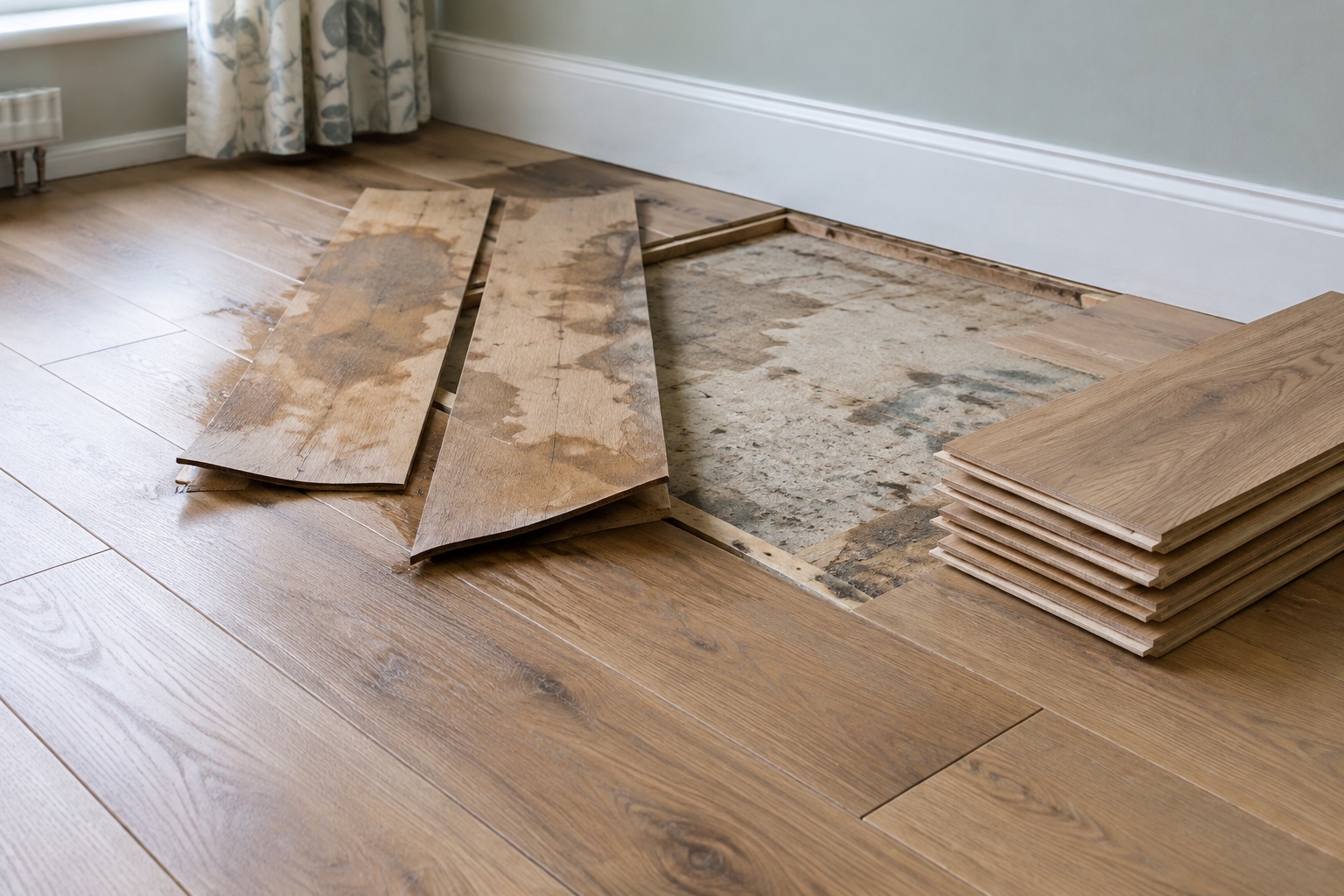
After a leak, deciding whether boards can be saved comes after stopping the water and understanding where it travelled. A floor can look dry while its underlay or supporting deck remains wet. Conversely, staining does not automatically mean every board must be discarded. A reliable repair separates emergency action, moisture assessment, drying and reinstatement. This guide concerns the flooring assembly after water exposure, rather than general timber decay, and explains why the visible patch alone is a poor basis for choosing the extent of the work.
Stop the water and protect people first
If water is still entering, stop using the affected appliance or supply where this can be done safely and arrange an appropriate plumber or other specialist to address the source. Do not enter standing water where electrical equipment or circuits may be affected; obtain qualified electrical advice. Restrict access to slippery surfaces, raised boards and unstable areas. Avoid dragging heavy furniture across damaged joints. Flooring repairs are not a substitute for leak isolation or electrical safety checks. Note when the escape began, what was affected and what has been isolated, because the source and duration help inform the assessment that follows once the immediate danger is controlled.
Document the exposure without delaying essential action
Photograph the floor, adjoining rooms, skirting and visible water route where safe before damaged finishes are removed. Keep product details, installation records and receipts if available. If an insurer, landlord or managing agent is involved, check reporting and approval requirements promptly, without leaving an active hazard untreated while waiting for routine correspondence. Record whether the water came from a clean supply, appliance discharge or potentially contaminated source. Contaminated water requires specialist advice about handling and disposal; it is not simply a matter of drying the boards until they look acceptable. Keep an account of emergency work so later decisions can distinguish original damage from necessary opening-up.
Find the wet boundary within the floor assembly
A floating wood floor over underlay behaves differently from bonded timber over screed or boards fixed to a timber deck. Water can travel beneath the surface and emerge beyond the visible stain, including across thresholds and beneath fitted units. Carefully selected openings may be needed to inspect concealed layers, but this does not mean every board should immediately be lifted. Identify the affected finish, underlay, adhesive and base, together with accessible adjoining voids. Where staining stops at a cupboard or wall, establish whether that reflects a genuine boundary or simply the limit of what can be seen. The reinstatement area should follow evidence, not the outline of a surface mark.
Test readiness instead of judging by touch
Dry to the hand does not mean ready for reinstatement. Testing needs to suit the flooring and substrate, with results interpreted against the requirements of the proposed flooring system and the surrounding conditions. Timber readings and screed tests are not interchangeable. Readings from unaffected comparable areas can provide context, but they do not replace the acceptance criteria for installation. Keep a dated record of test locations and results so progress can be assessed rather than guessed. There is no dependable universal drying period: water quantity, exposure time, trapped layers and construction all matter. A calendar deadline should not override evidence that a concealed layer remains unsuitable to cover.
Make drying a coordinated stage of the repair
A drying specialist may recommend opening parts of the floor, removing wet underlay or controlling room conditions to reach trapped moisture. Follow a coordinated plan instead of applying intense local heat, which can add distortion. Identify any retained boards and store them in conditions suitable for the material and drying strategy. Dry room air alone may not dry moisture sealed below a finish. Agree who will monitor progress and who will confirm readiness before reinstatement begins. If odour, visible mould or contamination is present, seek appropriate specialist advice before handling or enclosing affected material. A neat new floor should not conceal an unresolved problem within the existing build-up.
Assess board construction and connections after drying
Some solid timber and engineered boards remain usable after controlled drying; others retain distortion, develop damaged joints or suffer finish failure or separation between layers. Laminate is a different material, and a swollen core generally cannot be restored by drying or sanding. Inspect tongues, grooves and locking edges as well as the visible face, particularly where boards have been lifted. Colour alone does not establish serviceability. Sanding depends on the construction, remaining usable surface and stability of the board, and it cannot repair a failed core or bond. The assessment should explain which defects are cosmetic and which prevent the floor from being reliably reassembled or left in service.
Compare a local patch with a wider relay
A local repair can suit limited damage where matching material is available and the installation method permits a reliable connection. A floating system may need lifting back from an accessible edge rather than cutting out only the wet rectangle. Bonded flooring needs compatible substrate preparation and adhesive, not new boards placed over unsuitable residue. Wider relaying may be necessary where damaged connections or wet concealed layers extend beyond the visible patch. Discuss colour, grain and sheen differences before agreeing the boundary. Even the same product can look different beside an older floor. Ask how reusable material, replacement boards and likely breakages during lifting have been allowed for in the repair plan.
Accept the base before enclosing it again
Before boards return, confirm that the leak is resolved and the substrate meets the selected system's moisture, flatness and stability requirements. Replace unsuitable underlay and damaged support materials rather than covering them. Recheck thresholds, trims and movement allowances, particularly if the replacement build-up differs from the original. Keep the drying findings and material details with the repair paperwork, including any limits on the area assessed. After completion, follow the product's cleaning and environmental guidance and investigate renewed swelling or staining promptly. Treating a fresh symptom as harmless movement left over from the first leak can delay recognition of a recurring source or a concealed layer that was not adequately resolved.
Questions we're asked about this
Plan reinstatement after the leak is resolved
Provide photographs, flooring details and any drying reports to discuss reinstatement separately from leak repair and specialist drying.
Get a free quote
Reply within 24 hours - No obligation