
Problems & repairs
Wood floor expansion gaps and buckling: finding the cause
A raised ridge needs a diagnosis before anyone cuts back the perimeter.
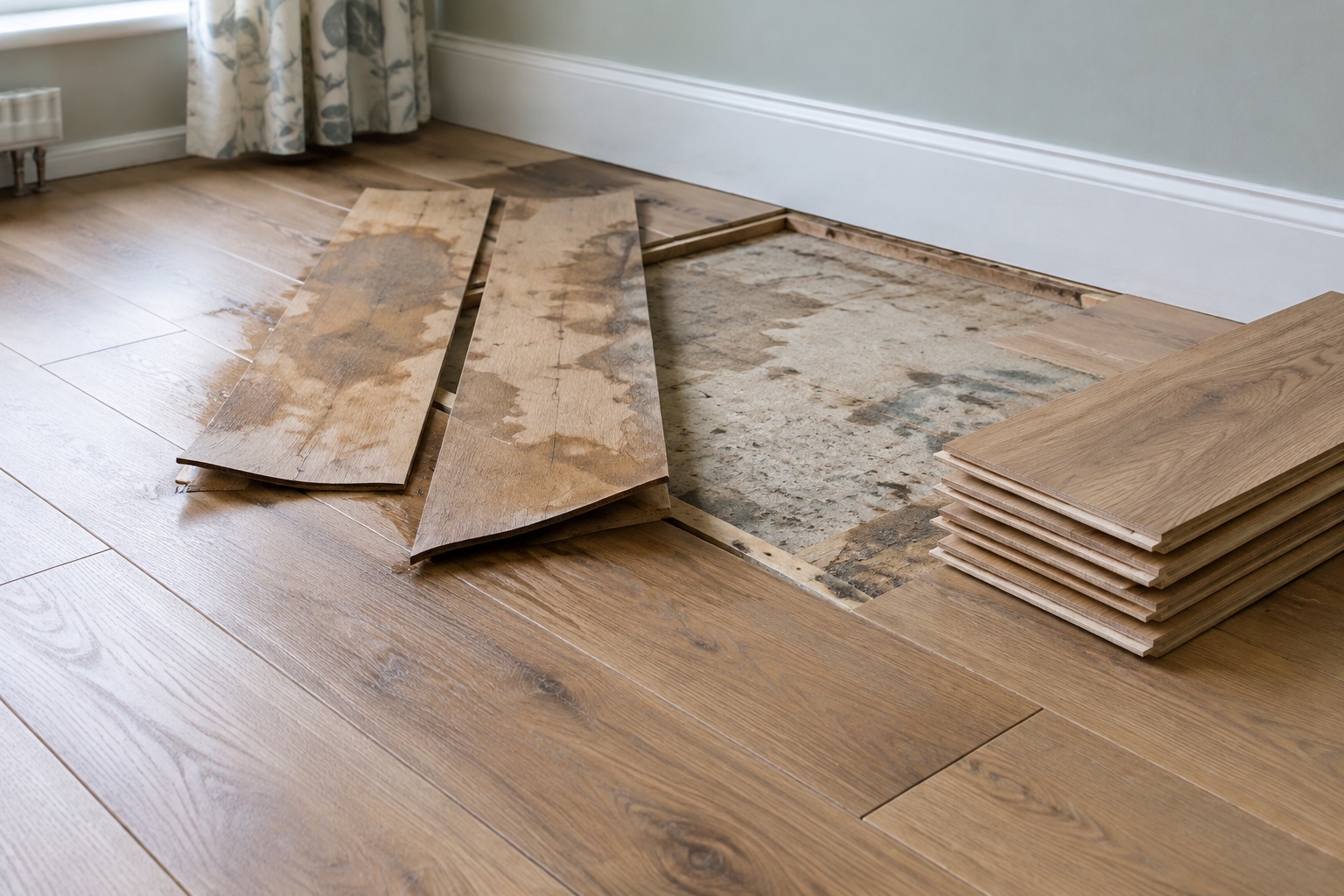
A wood floor that rises into a ridge may be expanding against an obstruction, reacting to moisture or following movement in the surface beneath it. These causes need different repairs. Before trimming an edge or adding fixings, establish the flooring type, where the distortion occurs and what recently changed. Releasing pressure can help a restrained floor, but it will not dry a wet base or stabilise a moving deck. The first task is to separate these possibilities without making permanent alterations to the wrong component.
Read the shape before naming the fault
Look across the floor in sideways light and record where its profile changes. A broad dome across several rows, a ridge along one joint and boards with raised edges are different observations, not interchangeable descriptions of buckling. Photograph the area from consistent positions and note whether nearby joints are opening. Keep people away from loose boards or raised edges that create a trip hazard. Do not weigh a ridge down with furniture or repeatedly stamp on it to test whether it will settle. Those actions can damage the joints without establishing whether the source is restraint, moisture or an uneven supporting surface.
Distinguish distortion from creaking and bounce
A creak is evidence of friction, not proof that the floor lacks expansion space. Boards may rub against one another or against fixings while remaining broadly flat. A springy patch can indicate a hollow beneath a floating floor, compressed underlay or movement within the supporting deck. Where it is safe, an assessor can compare the visible profile with movement under normal loading and establish whether the finish moves independently of the base. If the whole assembly deflects together, trimming the perimeter is unlikely to solve the main problem. Noise and lifting can also have separate causes, so finding one should not automatically end the investigation.
Identify how the floor was installed
Find the product name, fitting instructions and any installation photographs. Floating boards, fully bonded flooring and mechanically fixed timber behave differently when they move. A floating system should not be fastened down to suppress a raised patch, because that introduces another restraint. A bonded installation may require investigation of the adhesive and substrate rather than an edge adjustment. Solid timber and engineered boards also differ in their movement characteristics. If paperwork is missing, a careful inspection at an accessible edge can help establish the build-up. Do not assume that a wood-looking finish is timber: laminate and other products need their own assessment and repair criteria.
Trace the complete route where movement is restrained
The walls are not the only places where flooring can become trapped. Door linings, pipe penetrations, thresholds, hearths and changes of direction all need consideration. A trim may appear to conceal a clearance while pressing the boards against the base. Fixed cabinetry can also restrain a floating system, depending on how the installation was designed. Record alterations made before the lifting appeared, including new fitted furniture or replacement thresholds. Removing suitable trim for inspection is different from immediately cutting the floor. Establish where usable clearance exists along the affected run and whether any apparently generous gap is cancelled out by a tighter obstruction elsewhere.
Follow the product rather than a universal gap
There is no single expansion allowance suitable for every wood floor and room. The required detail depends on the flooring system, installation method, uninterrupted dimensions and conditions specified by its manufacturer. Some connected layouts require movement breaks at doorways or between areas. The installer should compare the actual room arrangement with the relevant instructions rather than copy a dimension from another product. Skirting or an appropriate trim should conceal the allowance without immobilising the floor. Simply widening a gap is not a complete repair where moisture is excessive, a bond has failed or the joints have already suffered damage that prevents the boards from working together properly.
Check moisture and the supporting surface
Ask whether a leak, wet cleaning, fresh screed, prolonged lack of heating or a change in heating operation preceded the distortion. A dry-looking face cannot establish what is happening below it. Appropriate tests may include the flooring, substrate and room conditions, using methods suited to each material and interpreting the results against the product requirements. Check flatness and stability as well as moisture: a high spot beneath a floating floor can resemble a local lifting problem. If an active leak is suspected, arrange the appropriate specialist to stop it before flooring repairs proceed. Do not assume ordinary seasonal movement explains sudden distortion beside wet services.
Match the repair to the confirmed cause
Where restraint is confirmed and the boards remain sound, correcting the clearance may allow recovery, although a perfectly flat result cannot be promised. Split boards, damaged locking edges or a failed adhesive bond may require selective replacement or a wider relay. If the deck is unstable or uneven, that defect needs attention before reusable flooring returns. Ask which boards can realistically survive lifting and how replacements will be matched. The proposed method should follow the flooring system rather than offer a surface-only fix. Sanding a raised area or covering it with another finish can conceal the profile temporarily while leaving the original cause and damaged connections in place.
Record the outcome and watch for recurrence
Keep a record of the original shape, identified restrictions, moisture findings and product instructions used for the repair. Agree what changes would justify another inspection and how the repaired area should be used while it settles. Follow the manufacturer's cleaning and environmental guidance rather than trying concentrated heat or repeated wetting to force a result. Check thresholds and adjacent joints as well as the original ridge, because an unresolved constraint can move the visible symptom elsewhere. If lifting returns, the records help distinguish an incomplete repair from new water exposure or a later alteration that has trapped the floor again. Persistent movement needs reassessment, not repeated trimming without explanation.
Questions we're asked about this
Have a raised floor assessed before altering it
Share photographs of the ridge, thresholds and room edges, together with product details, to discuss the flooring investigation and repair scope.
Get a free quote
Reply within 24 hours - No obligation