
Planning, process & cost
Airing cupboard shelving: preserve ventilation and service access
Useful linen storage starts with the equipment that must remain reachable.
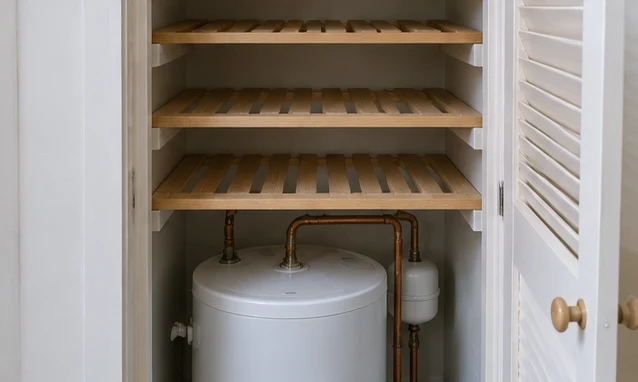
An airing cupboard is not an empty cupboard with an inconvenient cylinder inside. It is a service space that may also hold linen, and the shelving must respect that order of priorities. A new shelf can make folded towels easier to reach while accidentally blocking a valve, trapping a removable cover or covering an air opening. Begin with the equipment instructions and a clear view of everything already installed. The aim is accessible storage around an operating system, not the largest possible stack of shelves. Whether the cupboard contains a cylinder alone or additional equipment changes what can safely be built.
List the equipment before measuring shelves
Empty the cupboard and identify the cylinder, visible controls, pumps, expansion vessels, electrical connections and any other appliances. Photograph labels and obtain the relevant installation and servicing instructions. Do not identify equipment solely by the cupboard’s name: a former airing cupboard may now contain a different heating arrangement with different requirements.
Ask the appropriate heating professional to identify required clearances and access routes where the layout is unclear. Joinery should not require moving plumbing or electrical equipment simply to make a shelf fit. If changes to services are genuinely needed, have them scoped separately by the relevant competent tradesperson before the carpenter fixes the final shelf positions.
Keep servicing space, not just a hand-sized gap
A person being able to touch a valve does not mean the installation is serviceable. Components may need room for tools, covers to slide off and a route for eventual replacement. Consider how the cylinder or another major item would leave the cupboard. A permanent shelf across the opening can turn an ordinary replacement into unnecessary demolition.
Build around the clearance requirements for the actual equipment rather than a remembered standard dimension. Mark service zones on a simple elevation, showing what must stay clear in front, above and to the side. If the instructions do not resolve a conflict, obtain advice before construction. Shelves should adapt to those zones, not ask the service engineer to work around finished joinery.
Separate linen airflow from appliance ventilation
Slatted shelves can let air circulate between stored items more readily than tightly packed solid surfaces. That can help the cupboard function as linen storage, but it does not prove that appliance ventilation requirements are met. Those requirements depend on the equipment and its installation. There is no universal vent size that makes every cupboard safe.
Never cover existing ventilation openings or assume a gap behind towels is adequate. If a gas appliance shares the space, obtain advice from a Gas Safe registered engineer before enclosing it or altering ventilation. Manufacturer guidance should govern clearances and any ventilation provision. A modern appliance may differ from an older one, so another household’s cupboard is not a reliable template.
Choose shelf details that remain usable
Agree which items belong in the cupboard and keep storage away from hot surfaces, controls and electrical equipment. Do not use the space for flammable liquids or aerosols. Slats need smooth edges and secure support so they do not snag fabric or lift unexpectedly when a towel is pulled forward. Narrow openings should not encourage awkward reaching around equipment.
Shelf depth matters as much as the number of levels. A shallower shelf may leave a better inspection view and make items easier to retrieve without leaning on pipes. Specify supports according to the load of stored linen and the available fixing background. Pipes, cylinder jackets and appliance casings are not shelf supports, and no part of the joinery should bear against them.
Make removable sections genuinely removable
Where agreed access depends on a removable shelf, design the removal sequence while the cupboard is empty. The shelf must pass through the opening without disconnecting services. A split shelf or separate front section may be more workable than a large panel with pipe cut-outs, but the detail needs stable support in everyday use.
Do not caulk, paint or screw an access section permanently shut after installation. Label less obvious removable parts and record which fixings release them. Leave enough room to operate those fixings with ordinary tools. A panel that can theoretically be removed only after several fixed shelves have been dismantled is not convenient routine access, particularly when a fault needs prompt attention.
Protect services during fitting and daily use
Leave a simple cupboard layout with the household records, showing the removable pieces and the areas intended to stay empty. This is useful when someone else restocks the cupboard or a future decorator proposes closing an unattractive gap. Include equipment references rather than attempting to write new servicing instructions. Revisit the shelf arrangement whenever heating equipment changes, even if the replacement occupies a similar footprint. Its access points, electrical connections and required clearances may differ enough to make an otherwise tidy old shelf unsuitable.
Before drilling for bearers, establish the routes of concealed cables and pipes. Service cupboards concentrate exactly the things that a screw must not strike. Detection and visible routes need to be considered together; if the wall remains uncertain, pause and agree a safe fixing approach rather than choosing an extra-long screw for reassurance.
At handover, check valve access, control visibility, ventilation openings and the removal of designated shelf sections. Keep linen below the agreed limits rather than gradually filling every clearance. If the cupboard develops dampness, staining or an unfamiliar smell, investigate the cause with the appropriate professional. More slats or a stronger fragrance will not resolve a leak, equipment fault or ventilation problem.
Questions we're asked about this
Planning new airing cupboard shelves?
Send an empty-cupboard photograph and equipment details, noting any service clearances already identified by your heating professional.
Get a free quote
Reply within 24 hours - No obligation