
Planning, process & cost
Choosing a fitted wardrobe company: questions worth asking
The best wardrobe firm for you is the one whose survey, drawing and quote match your room.
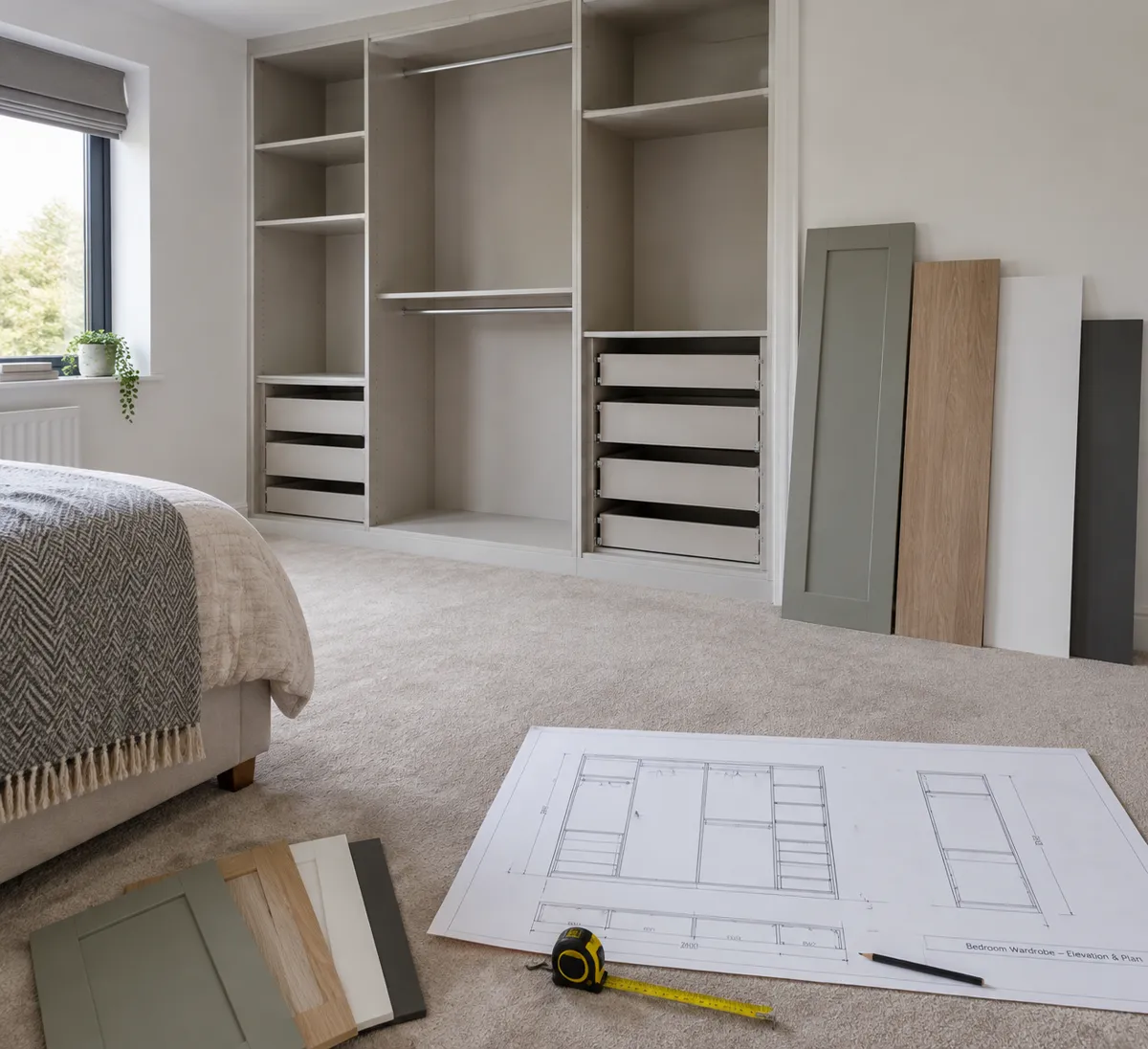
Searching for the best fitted wardrobe company produces showroom chains, national franchises, local joiners and independent carpenters all claiming the same thing. There is no single best option, because what suits a large new-build bedroom may be wrong for a Victorian alcove with a sloping floor. What separates a good supplier from a frustrating one is how carefully they survey, how clearly they explain what you are buying and who actually does the fitting. This guide sets out what to check before you sign, so you can compare quotations on substance rather than on brochure photographs and offers.
Modular systems versus made-to-measure
Many retail wardrobe companies use standard carcass sizes with infill panels to fill the gaps. That can be efficient in square rooms but leaves wider fillers and less usable space where walls are uneven or the ceiling slopes. Made-to-measure work by a joiner or carpenter builds carcasses to suit the space, usually with scribed panels against the wall and ceiling.
Neither is automatically better. Ask which approach a company uses, and how they deal with out-of-square walls, skirting, coving and radiators in your particular room.
What a proper survey looks like
A careful surveyor measures heights at several points, checks walls for plumb, notes sockets, switches, pipes and loft hatches and asks how you will use the space. They should talk about hanging lengths, shelves and drawers, not just door styles.
Be wary of a price given from two measurements and a photograph. It may be fine for a simple run, but awkward rooms usually need adjustments that only show up on site, and those can turn into extras.
- Measurements taken at several heights and both ends
- Electrics, pipes and hatches noted on the plan
- Interior layout discussed against what you own
- Clarity on who fits and who removes old furniture
Reading the quote
A useful quote lists the carcass material and thickness, door construction and finish, hinges and drawer runners, interior fittings, and whether end panels, plinths and top fillers are included. It should state who removes existing wardrobes, whether any electrical work is needed and who is responsible for decorating afterwards.
Compare like for like. A lower figure may use thinner carcasses, basic runners or fewer drawers. A higher one may include painting, lighting or a full-height scribed finish.
Materials and hardware that matter
Moisture-resistant boards, solid backs and good-quality hinges and runners make more difference to how the wardrobe ages than the door style. Soft-close hinges and full-extension runners are now common, but quality varies widely.
Painted doors can be sprayed off site or hand-painted in place. Ask which, and how touch-ups will be handled if a panel is marked during installation.
Lead times, fitting and aftercare
Ask how long manufacture takes, how many days the fit will occupy the room and whether the same people fit as surveyed. Clarify what happens if a door warps or a runner fails, and how adjustments are booked after the first few months as the house settles.
If lighting is included, any new circuit or connection should be done by a qualified electrician; a wardrobe fitter should not be wiring into the mains unless they are competent and registered to do so.
Red flags to watch
Pressure to sign on the day for a discount, large deposits before a final drawing, and vague descriptions such as 'quality materials' are reasons to slow down. So is a company that cannot tell you who will actually do the fitting.
Look at finished examples where you can, read the terms on deposits and cancellation, and make sure any drawing you approve matches the price.
Preparing your room before the survey
You will get a more accurate design and price if the room is ready for a proper look. Clear the wall where the wardrobe will go as far as practical, so the surveyor can see the skirting, sockets, any boxing and the condition of the plaster. Lift the corner of a carpet if you are unsure what is beneath it. Make a rough list of what you need to store: how many long dresses or coats, how many shirts, folded jumpers, shoes and bags, and anything bulky such as suitcases or bedding.
Decide in advance whether existing skirting and coving should be cut back so the units sit tight to the wall, or whether the design should scribe around them. Think about whether you want to keep a radiator, window or loft hatch accessible, and whether a bedroom light switch will end up behind a door. Bring photos of styles you like, but focus the conversation on use and space; a good designer will translate that into door styles that suit the room.
Questions we're asked about this
Thinking about fitted wardrobes?
Send us your room size, photos and how you want to use the space, and we will talk through a made-to-measure option.
Get a free quote
Reply within 24 hours - No obligation