
Planning, process & cost
Choosing Internal Door Handles and Latches
Choose the mechanism and measurements together, rather than buying handles by appearance alone.
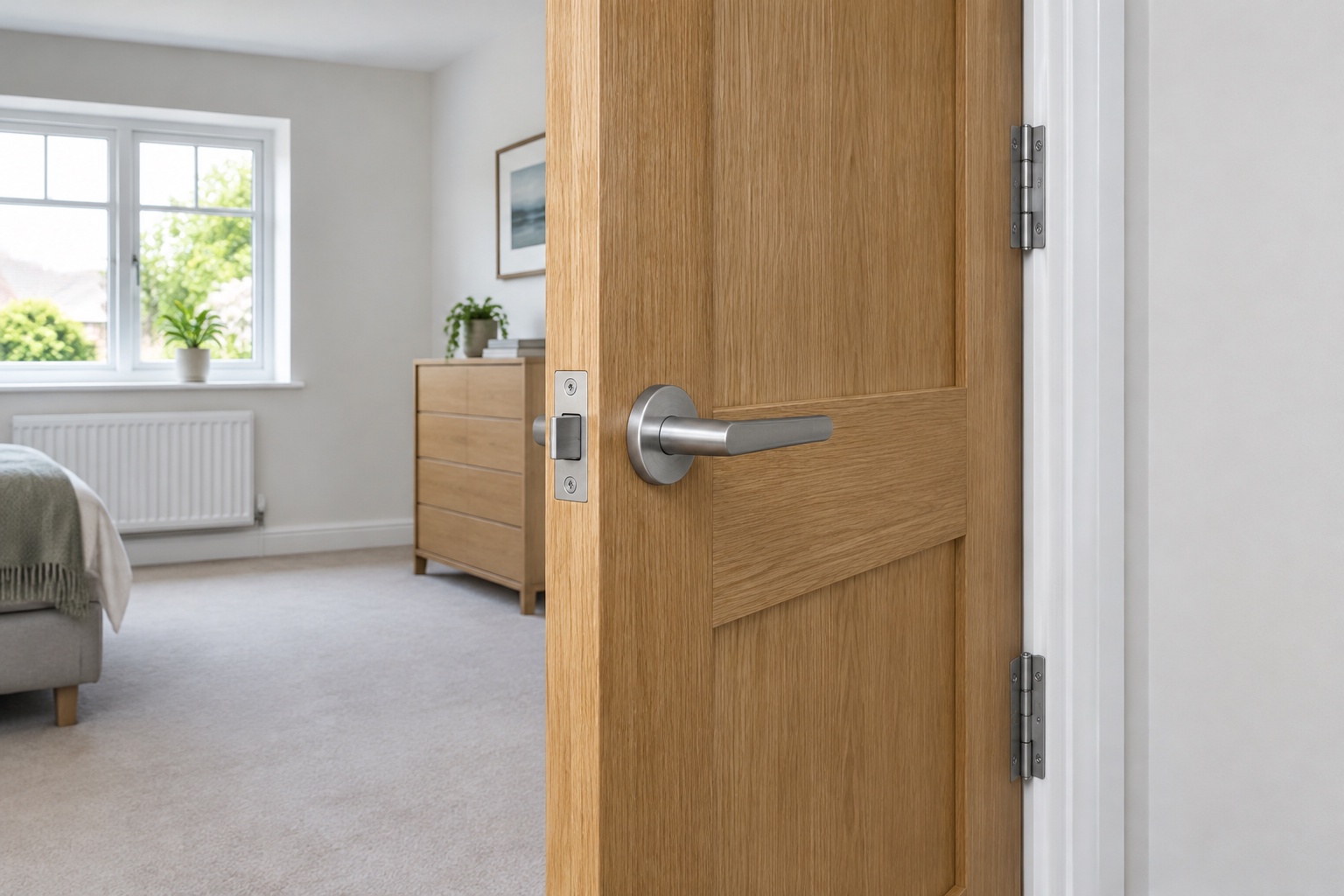
Two handles can look almost identical yet require different latches, spindle arrangements or fixing positions. Conversely, a good replacement may fit the existing preparation with very little alteration. The useful starting point is therefore the door as it stands: its thickness, existing holes and the way you want it to operate. This guide is about choosing compatible furniture and latch hardware, not selecting the door itself. Keep the technical drawings beside the finish samples until every dimension and operating detail has been checked.
Decide what each door needs to do
Separate passage doors from rooms needing privacy before choosing a matching range. A passage latch simply holds a door closed. A bathroom arrangement may add a privacy turn and an emergency release, but the precise mechanism varies. A locking requirement needs its own assessment rather than an assumption that any handle set accepts a key.
Think about the household's use: whether the handle is easy to grip, whether a return end would be helpful, and whether a privacy release is understandable from outside. Keep emergency access practical. Matching appearance across rooms is useful, but the mechanism still has to suit the purpose of each opening.
Record the existing preparation
With permission and suitable care, have the existing furniture removed for inspection. Record door thickness, spindle size, fixing centres, latch faceplate dimensions and the shape of any existing recess. Photograph both faces and the door edge with a scale visible. A handle still attached to the door can hide an unexpectedly large hole.
Check the condition of the timber around screw holes and the latch pocket. A larger rose might conceal a mark without providing sound fixing material underneath. If the new hardware needs holes close to old ones, ask a carpenter whether repairs are necessary before ordering. Cosmetic coverage and mechanical support are different questions.
Understand backset rather than case length
Backset is the distance from the latch faceplate reference face at the door edge to the centre of the spindle follower. Case length describes the overall depth of the latch body. They are related dimensions, but they are not interchangeable. Product names may emphasise one while the drawing shows the other.
Compare the actual manufacturer's diagram with the existing preparation. A different backset shifts the handle position and may require new holes through the door faces. On a narrow stile, that move can bring a rose against moulding or leave too little suitable timber. Measure from the stated reference points, not from a rounded edge by eye.
Match the lever and latch spring arrangement
Some lever handles contain their own return springs; others rely more heavily on the latch mechanism. The latch needs to be compatible with the selected furniture, including the spring duty and intended operation. A handle that droops is not automatically evidence that the screws need tightening.
Check spindle size, engagement and the supported door-thickness range for the complete assembly. Do not assume a spindle from an old set is suitable because it passes through the follower. It must engage both handles correctly without bottoming out or fouling the mechanism. Follow the supplied instructions on spindle adjustment and retaining screws rather than improvising with mismatched parts.
Check roses, backplates and through-fixings
A rose and a long backplate distribute their fixings differently. Either may conceal the old preparation, but neither guarantees that the new screws land in sound material. Compare the complete fixing layout, including any concealed mounting plate, with the latch position and the holes already present.
Many sets use bolts passing through the door. The chosen latch must accommodate those bolts in the specified positions; drilling through an unsuitable latch case is not a solution. Confirm that decorative covers can be fitted and later removed with the available clearance. Tightening should hold the furniture square without compressing the assembly until the lever or latch binds.
Treat privacy hardware as a complete set
A privacy turn may operate a separate bathroom lock or form part of a combined arrangement. The distance between handle spindle and lock centre must match the mechanism where a backplate joins them. Buying a visually matching turn separately does not establish compatibility.
Check the required handing, the emergency-release method and how the room will be opened if someone needs assistance. Ask the supplier to confirm which latch or lock, spindle and fixings belong together. If a door already has redundant keyholes or a different lock pocket, include those in the assessment. New furniture should not leave exposed openings or unsupported fixings disguised beneath a cover.
Choose a finish for hands and cleaning
View a sample in the room's lighting and, if possible, beside existing hinges and other visible metalwork. Finish names are not consistent between manufacturers, so two products described with the same colour may differ noticeably. Decide whether a coordinated family of hardware matters more than a close photographic match.
Consider cleaning instructions as part of selection. Abrasive products can damage coatings, and bathroom cleaning routines may expose handles to unsuitable chemicals. Feel the underside of the lever and try the grip with a relaxed hand. A sculptural shape that looks elegant in a photograph may be uncomfortable or awkward for someone with reduced hand strength.
Prove the fit before ordering the whole house
For several doors, make a schedule recording thickness, backset, operating function and any unusual preparation. Doors within one home may have been altered at different times. Test a representative set before assuming a single shopping list suits every opening, and keep packaging until the compatibility checks are complete.
During fitting, check free lever return and full latch withdrawal before closing the door. Then check engagement with the strike without slamming or lifting the handle. Have any alignment problem assessed separately from the hardware choice. Finally, retain product details and adjustment instructions so a future replacement can be selected by specification rather than appearance alone.
Questions we're asked about this
Check the hardware before ordering
Prepare photographs, door thicknesses and latch measurements for a fitting discussion before committing to a full matching set.
Get a free quote
Reply within 24 hours - No obligation