
Planning, process & cost
How to fit and adjust concealed cabinet hinges
Most uneven cupboard doors are an adjustment away from being straight.
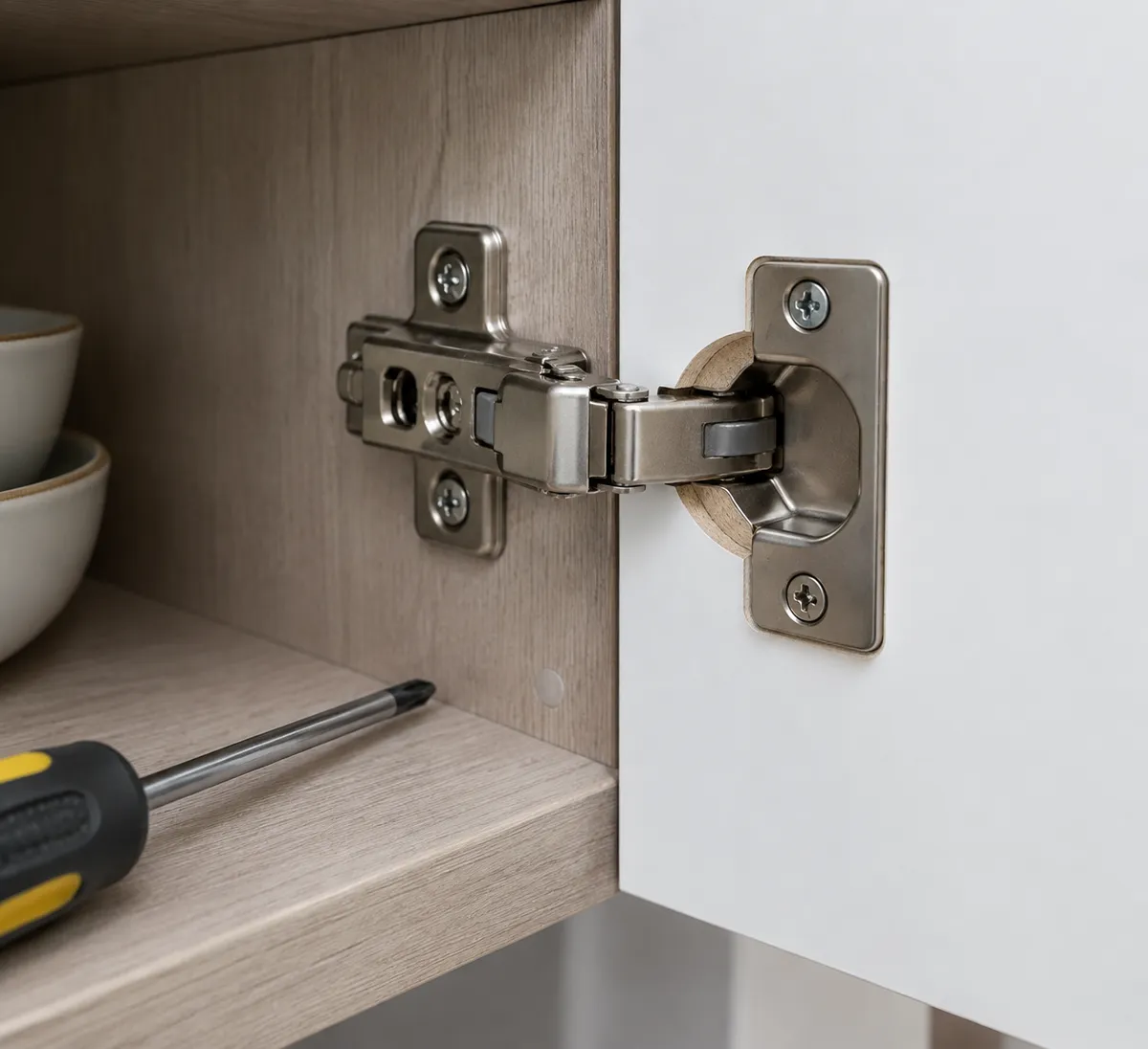
Nearly every modern kitchen and fitted wardrobe uses concealed cup hinges, the kind hidden inside the door and fixed to a plate on the cabinet side. They are clever pieces of hardware with built-in adjustment, which means many sagging or misaligned doors can be corrected in minutes with a screwdriver. Fitting new hinges to a new door is more exacting, because the cup hole has to be drilled accurately. This guide explains the parts, how they are fitted and how to adjust them, with notes on when a door problem is really a cabinet or carcass problem.
Know which hinge you have
Concealed hinges come as full overlay, where the door covers the cabinet side; half overlay, where two doors share one partition; and inset, where the door sits inside the frame. The hinge arm shape differs for each, and so does the mounting plate height. Opening angles also vary, with wider-opening hinges used where internal drawers need clearance.
When replacing a broken hinge, take the old one to match the brand, cup diameter, overlay and plate. Mixing systems on one door rarely works.
Drilling the cup hole
The hinge cup sits in a flat-bottomed hole, commonly drilled with a dedicated hinge-boring bit at a set distance from the door edge. The depth must stop short of the face, especially on thin or painted doors. A drilling jig keeps the distance consistent and the hole square.
Measure positions from the top and bottom of the door so the hinges clear shelves and drawer runners inside the cabinet. Tall doors need extra hinges to prevent bowing.
- Match overlay type to the door position
- Use a jig for consistent edge distance
- Check drilling depth on a scrap piece first
- Add hinges on tall or heavy doors
Mounting plates and clip-on fitting
Mounting plates are screwed to the cabinet side on a line set by the hinge system, often using existing pre-drilled holes in flat-pack carcasses. Most modern hinges clip onto the plate, so the door can be removed and refitted without disturbing the adjustment.
Screw into sound board. Chipboard that has been over-tightened or water-damaged will not hold, and that is the usual reason a plate pulls out.
The three adjustments
Side adjustment moves the door left or right to even the gap between neighbouring doors. Depth adjustment pulls the door closer to or further from the carcass so it closes flush. Height adjustment, usually on the plate, raises or lowers the door to line up with its neighbours.
Work in small turns and adjust every hinge on a door equally, or the door will twist. Align a whole run, starting from one end, rather than chasing one door at a time.
When adjustment is not enough
If doors cannot be brought into line, check the carcass. A cabinet that is out of level or racked out of square throws every door off, and no hinge setting will cure it. Wall units may have dropped on their hangers, and base units may have settled on uneven legs.
Swollen chipboard around a plate screw usually means a leak nearby. The carcass side may need repairing or replacing before new hinges will grip.
When to get help
Replacing a few hinges and adjusting doors is a reasonable homeowner task. Re-hanging a full kitchen with new doors, drilling expensive painted fronts or correcting carcasses that have dropped is where a carpenter is worth calling, since a misplaced cup hole ruins a door.
If you are replacing doors on existing units, a carpenter can check the hinges, plates and carcasses at the same time.
Doors, drawer fronts and handles together
Hinge adjustment gets doors level with one another, but a run of cupboards looks right only when doors, drawer fronts, end panels and handles all line up. Before adjusting, close every door and step back to see the overall pattern. Decide which edge you want to be the datum, usually the worktop line on base units or the underside of the wall units, and bring the whole run to that line rather than adjusting each door to its neighbour. Small errors otherwise accumulate across a long run and leave a noticeable step at one end.
Drawer fronts have their own adjustment, normally through the runner fixing or cams behind the front, so treat them as part of the same exercise. Handles are best fitted after the doors are aligned, using a drilling template so every handle sits at the same height and distance from the edge. On handleless kitchens, the push-to-open mechanisms also need setting so doors open reliably without being pressed hard against neighbouring fronts. Check everything again after a few weeks of use, when hinges have bedded in.
Looking after hinges
Concealed hinges need little maintenance, but grit and grease from cooking can stiffen the movement over time. Wiping the arms and checking that screws remain tight once or twice a year prevents most failures. Avoid hanging heavy items such as towels or bags from cupboard doors, as the extra leverage stretches the mounting plate fixings and is a frequent cause of drooping.
Questions we're asked about this
Kitchen or wardrobe doors out of line?
Tell us what is wrong and send a couple of photos, and we can look at hinges, doors and carcasses together.
Get a free quote
Reply within 24 hours - No obligation