
Planning, process & cost
How to hang or replace an internal door, step by step
Why a new leaf rarely drops straight into an old opening, and what a careful hang looks like.
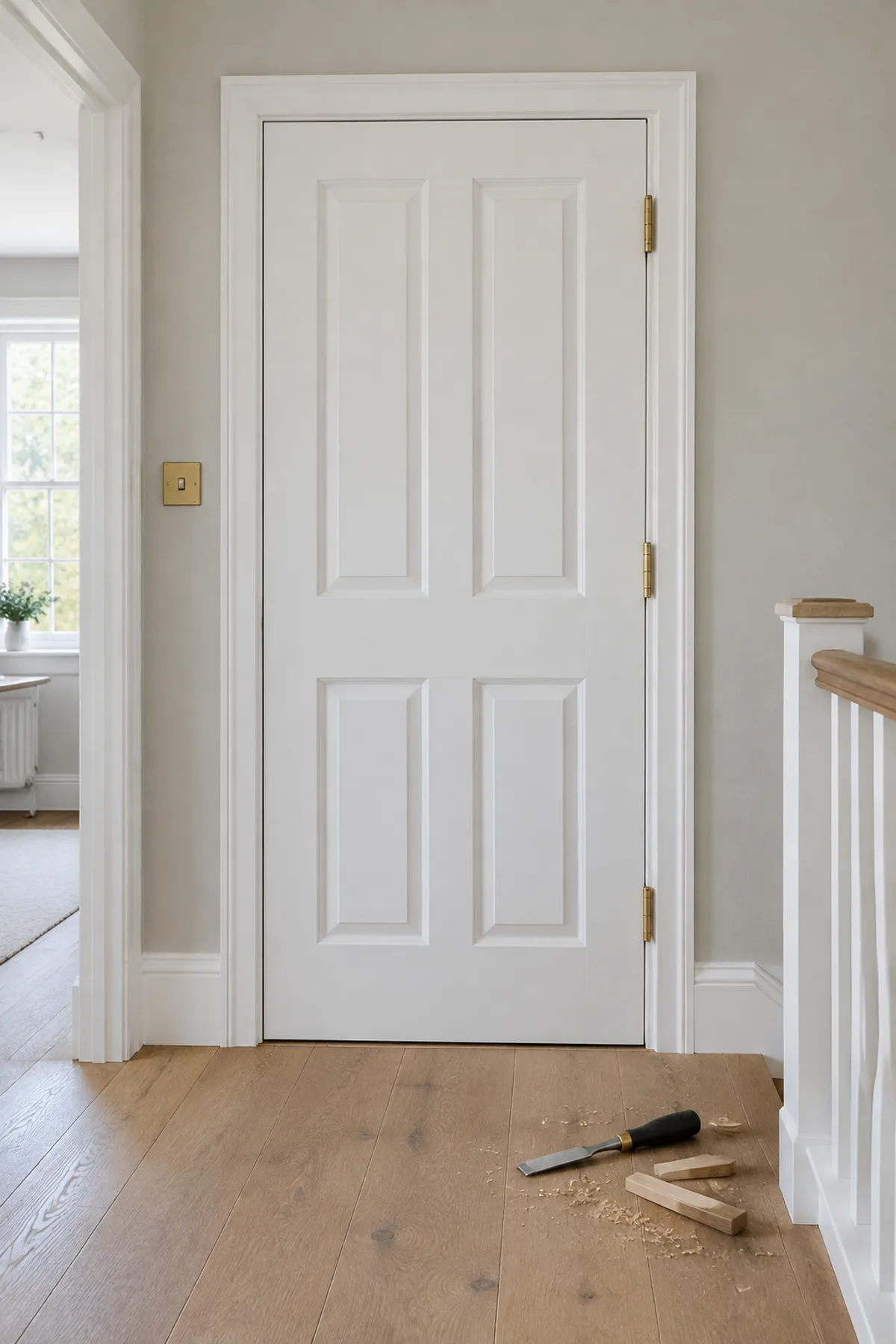
Buying a new internal door looks simple until it arrives and is a few millimetres too wide, the old hinge positions sit in the wrong place and the floor slopes towards one corner. Hanging a door is a sequence of small, unforgiving cuts. Each one is easy to get slightly wrong and impossible to put back. This guide walks through the order a carpenter works in when replacing an interior door or fitting a new one into an existing lining, so you can judge whether to attempt it, how long it should take and what a good result looks like once the tools are packed away.
Measure the opening, not the old door
Take the width between the lining jambs at the top, middle and bottom, and the height on both sides from the finished floor to the head. Openings in older houses are seldom square, so the three widths often differ. The smallest figure decides what the new leaf must be trimmed to, and the difference between them tells you whether the lining has twisted or the wall has moved.
Ignore the dimensions printed on the old door. It may have been planed repeatedly over decades, cut down for carpet that has since been replaced, or fitted into a lining that was packed out later. Standard leaf sizes in the UK include both imperial and metric ranges, and choosing the nearest size above the opening keeps trimming to a minimum.
Trim the leaf evenly from both edges
Most solid and engineered doors allow a limited amount to be removed from each stile and from the bottom rail; the manufacturer states how much. Taking everything off one edge leaves the panel layout lopsided and can cut into the internal frame of a lighter leaf. Mark the leaf in the opening, allowing a consistent working gap at the sides and head, then plane the hanging edge and the closing edge in turn.
The closing edge is usually given a slight bevel so it clears the stop as it swings. The bottom is set to the floor finish that will actually be there. If new carpet or wood flooring is planned, hang to that height rather than to bare boards, or the door will need to come off again within weeks.
Hinges, recesses and the hanging side
Hinge positions are marked from the top and bottom of the leaf, with a third hinge on heavier doors near the top hinge. If the lining already has recesses, the new leaf is marked to match them; if those old recesses are damaged or poorly placed, they may be filled and recut. The recess depth matters: too deep and the door binds on the hinge side, too shallow and the gap along the hinge edge becomes wide and uneven.
Screws should be the length and gauge the hinge was designed for, with at least one long screw reaching into solid timber behind the lining on heavier leaves. A door that droops after a month is usually a sign that the screws only gripped soft packing or old filler rather than the frame itself.
- Check the opening for square before ordering
- Confirm the final floor finish height
- Mark hinges from the existing lining where it is sound
- Use screws long enough to reach solid timber
Latch, keep and stops
The latch is bored into the closing edge at a height that suits the handle style, and its faceplate recessed flush. The keep on the lining must line up exactly with the latch tongue; a millimetre too high and the door will rattle or refuse to catch. Where an old keep recess no longer lines up, the timber is patched rather than simply enlarged.
Door stops are the thin beads the leaf closes against. If the new door is a different thickness from the old one, the stops may need moving so the face sits flush with the lining edge. Small adjustments here are what make a door feel solid and quiet when it closes.
Mistakes that show up later
The common faults are cutting the bottom before checking the floor level, removing too much from one stile, over-deep hinge recesses and forgetting to seal the cut edges. Bare top and bottom edges absorb moisture, particularly near bathrooms, and an unsealed leaf can twist across a winter. Paint or seal every edge, not just the faces you can see.
Another trap is hanging a new door in a lining that is itself out of plumb. The leaf may look acceptable when shut but swing open or closed by itself. In that case the lining needs correcting first, which is a frame job rather than a door job.
When to call a carpenter instead
One door with a sound lining and a level floor is a reasonable project for a careful homeowner with sharp tools and patience. A run of doors through a hallway, glazed or oak leaves that are expensive to replace if a cut goes wrong, and openings where the lining is twisted are where a professional saves money rather than costs it.
When you ask for a quote, say how many doors there are, whether you are supplying them, the type of handles and whether the floors are changing. Those details decide the time on site far more than the door style does.
Questions we're asked about this
Need doors hung properly?
Tell us how many doors you have, whether you are supplying them and what flooring is going down, and we will quote for the hanging.
Get a free quote
Reply within 24 hours - No obligation