
Planning, process & cost
Reversing an Internal Door Opening
A different swing can improve a room, but the whole door-and-frame arrangement needs checking.
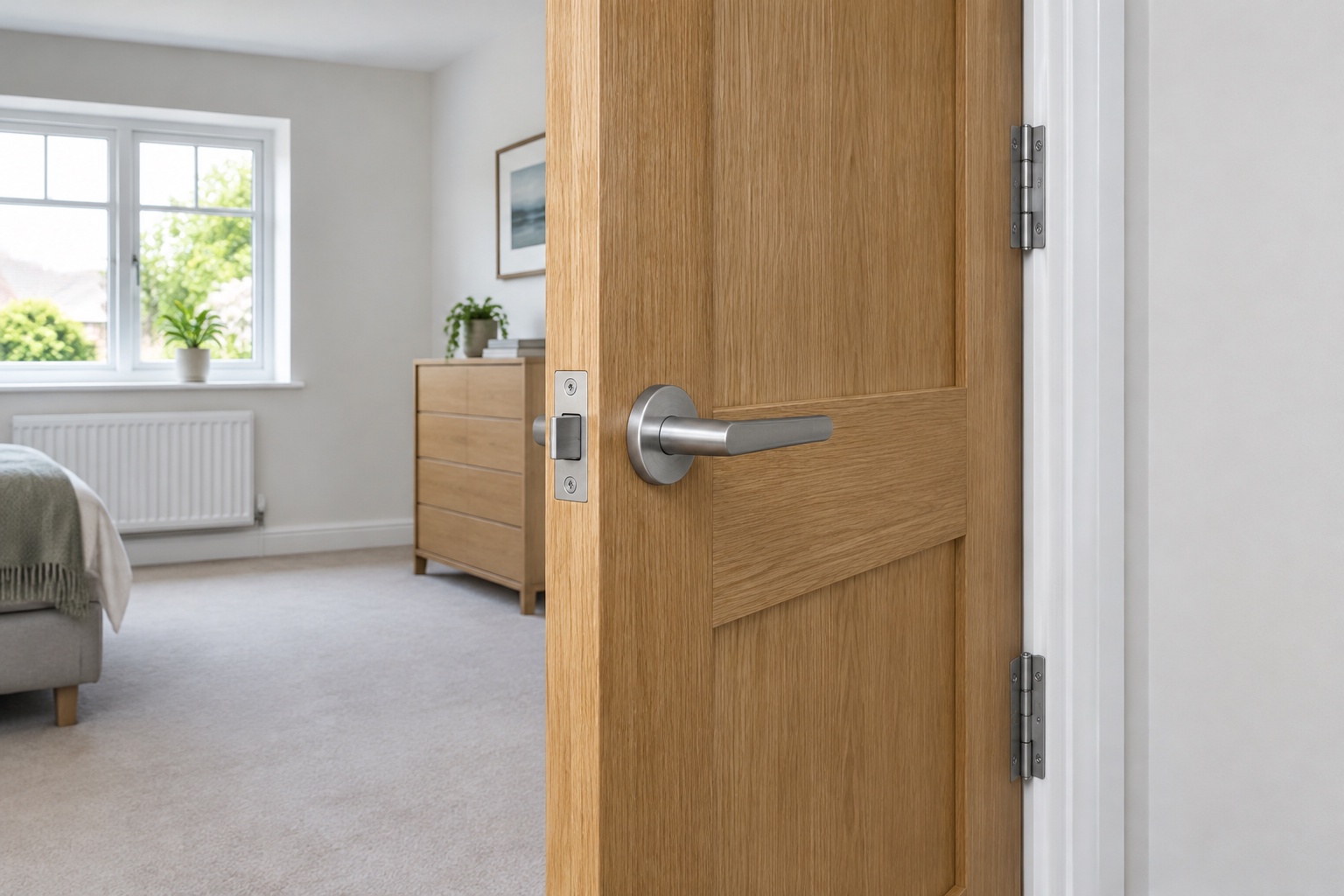
Reversing a door can mean changing which side carries the hinges, changing whether it opens into or out of a room, or doing both. Those are different alterations, even though all may keep the same doorway. Be precise about the intended movement before asking for work. This guide concerns an ordinary internal door retained within its existing opening, not forming, widening or moving a structural opening. The aim is to assess whether the change is sensible before anyone cuts new hinge recesses.
Draw the existing and proposed swing
Sketch the room from above and mark the hinges, handle and full arc of the door in both arrangements. Label the corridor side and room side rather than relying on descriptions such as left-handed, which different people may interpret differently. A photograph marked with an arrow can help confirm the proposal.
Include the approach to the doorway, not just the space behind the open leaf. The new swing should make entering and leaving straightforward with shopping, laundry or a mobility aid. If the benefit only appears when furniture is arranged in an unrealistic way, reconsider the proposal before making irreversible changes to the joinery.
Check circulation and safety before carpentry
A door that currently opens into a room may obstruct a corridor if reversed. Check neighbouring doors, landings and changes of level, along with the space someone needs to stand clear of the moving leaf. Consider children, visitors and anyone who may approach from the other side without seeing it move.
Where the doorway forms part of a protected escape route, or its safety role is uncertain, obtain a qualified assessment before altering the swing or hardware. Relevant requirements can depend on the building and its use. Do not treat retaining the same opening as proof that the proposed change has no safety or compliance implications.
Inspect the lining and stop arrangement
The frame may have separate planted stops, or it may have a shaped rebate that is integral to the lining. Moving a planted stop can sometimes support a change of swing, whereas an integral rebate may make the alteration much more involved. Inspect the actual construction rather than assuming the stop will prise off cleanly.
Check whether the lining is sound where new hinges and the strike would be fixed. Old repairs, split timber and clusters of previous screw holes can limit the options. Replacing or repairing joinery may be more sensible than cutting another set of recesses into material that will not provide reliable support.
Establish whether the leaf can be reused
Door edges and faces are not always interchangeable. The closing edge may be bevelled to suit the present movement, while glazing details, mouldings or face finishes may have a preferred orientation. Existing hinge recesses and the latch pocket also affect how much repair will be visible after a reversal.
Have a carpenter assess the construction and any manufacturer's limits on alteration. The ability to trim an edge or relocate hardware depends on what is behind the surface, not just the door's overall thickness. Reusing the leaf should be a conclusion reached after inspection, not a promise based solely on its appearance while hanging.
Plan hinges and latch as one alteration
Changing the hinge side normally means preparing new hinge positions on the opposite jamb and making good the old positions. Changing the opening direction may also require the stops and latch arrangement to change. The exact combination depends on the proposed swing and the construction already identified.
Check the latch bolt's permitted handing and whether it can be reversed according to its instructions. The strike needs sound fixing material and the correct relationship to the closed leaf. Do not assume that moving only the hinges completes the job. Handle clearance, spindle position and old cut-outs all belong in the same assessment before work starts.
Test walls, switches and floor clearance
Use a temporary full-size indication of the proposed swing to check what the handle and door edge will meet. Include radiators, cabinets, towel rails and window boards. A leaf may clear an obstruction while its lever strikes it. Agree a suitable stop position that prevents damage without becoming a trip hazard.
Check the complete floor arc, particularly where finishes change or the floor rises locally. The new movement may cross an area the door never passed over before. If a switch becomes hidden behind the open leaf, decide whether the layout is acceptable. Any electrical alteration should be handled separately by an appropriately qualified electrician.
Allow for visible repairs and decoration
Old hinge pockets and strike recesses do not disappear when new hardware is fitted. Agree how they will be repaired, which faces will be redecorated and whether a clear-finished surface can reasonably be matched. A structurally sound repair can remain visible where grain and colour differ.
Stop removal may disturb paint or plaster at the frame junction. Moving the latch can also expose old holes around the handle. Include those effects in the intended finish, especially if only one side of the doorway is being redecorated. Where older coatings or materials are uncertain, have their condition assessed before sanding, stripping or other disruptive preparation.
Check the finished movement in everyday use
After alteration, the door should move through its intended arc without rubbing, excessive force or contact with nearby fittings. Check it from both sides, with adjacent doors in their usual positions. Confirm that the latch engages and releases normally and that privacy hardware remains understandable and accessible where fitted.
Try the activities that motivated the change: entering with a basket, reaching the light control or accessing the furniture behind the old swing. Inspect the stop position and completed repairs once decoration is finished. Keep the scope clear at handover so any later adjustment addresses the new arrangement rather than simply copying the old hinge or strike positions.
Questions we're asked about this
Assess the proposed swing first
Share a marked plan and photographs of both sides of the opening before agreeing the joinery changes and making good.
Get a free quote
Reply within 24 hours - No obligation