
Planning, process & cost
Renovating While Living at Home
An occupied renovation needs a working household routine, not just a programme of trades.
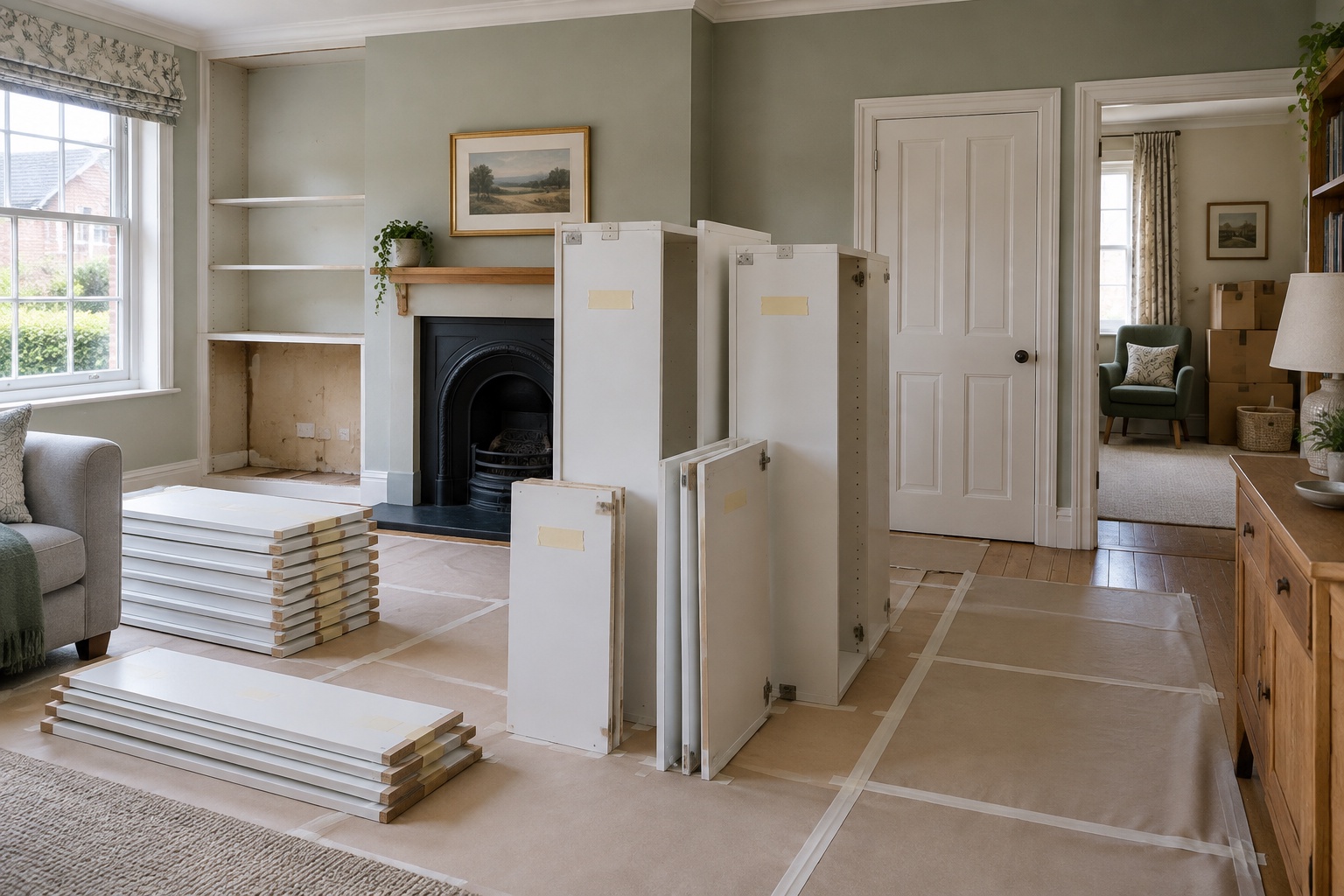
Living at home during renovation means running two activities through the same building: construction and ordinary domestic life. The arrangement only works while sleeping, washing, eating and safe movement remain genuinely possible. Rather than repeating a renovation sequence, this guide focuses on the daily boundaries and temporary facilities that make occupation manageable. Agree them with the contractor, review them as rooms change and be prepared to stay elsewhere when safe separation cannot be maintained.
Define what makes the home habitable each day
Write down the facilities your household must retain overnight: a usable toilet, drinking water, suitable washing arrangements, safe cooking provision and a secure sleeping area. Include needs that a general site discussion might miss, such as refrigerated medication, mobility equipment or a quiet place for a child to sleep. Tell the contractor which needs cannot be interrupted and ask how each phase affects them. A promise to “leave things tidy” does not establish whether water will be restored or a stair route reopened. Agree clear stop points: if an essential facility cannot be made safe and usable, occupation pauses rather than relying on an improvised workaround.
Keep a real boundary between work and living
Choose a clean living zone with an access route that does not pass through active work. Discuss suitable temporary screening, dust extraction and cleaning with the contractor; a loose sheet across a doorway is not a complete dust-control plan. Keep children, pets and visitors outside the work area even when tools are silent. Ask how the boundary will be maintained when materials are carried through and who closes it afterwards. Do not allow partitions, stored boards or protective coverings to compromise escape routes, alarms or required ventilation. If a route must close temporarily, agree an alternative before the closure rather than discovering the problem at bedtime.
Build a temporary kitchen around safe essentials
Keep food preparation away from dust and chemical storage. A temporary setup needs a clean work surface, suitable food storage, drinking water and a practical way to wash utensils; a kettle in a bedroom is not automatically an adequate kitchen. Ask an electrician to assess temporary power requirements where appliances would otherwise share unsuitable sockets or trailing extensions. Follow appliance instructions on ventilation, clearances and the surface underneath. Never bring outdoor cooking equipment indoors. Plan simple meals around the facilities that are actually available and arrange another option for days when they are not. Keep washing-up water separate from paints, adhesives and construction waste throughout the work.
Phase washing and toilet access honestly
Where more than one bathroom exists, retaining one until the other is usable may help, but the plumbing arrangement must support that sequence. Ask the relevant trade which interruptions affect the whole house and when safe service will resume. Confirm what “usable” means: connected drainage, water supply, privacy and safe access, not simply a sanitary fitting standing in position. With only one toilet or washing space, discuss suitable temporary facilities or another place to stay before disconnection. Do not use unfinished installations without the contractor's agreement. Keep hygiene supplies in the occupied zone and make arrangements for night-time needs, particularly for children or anyone with limited mobility.
Use morning briefings and evening handovers
A short daily conversation can prevent practical surprises. In the morning, confirm noisy periods, deliveries, service interruptions and any route that will close. Identify one person who can authorise changes so different household members do not give conflicting instructions. Before the team leaves, review the occupied route together when possible: covers secure, openings guarded, tools isolated, waste contained and external access secure. Ask whether fresh coatings, adhesives or treated areas restrict entry overnight. Record tomorrow's disruption somewhere everyone can read it. This is not a request for residents to inspect technical workmanship; it is a check that the agreed domestic arrangement still matches the condition of the house.
Fit work, school and caring around disruption
Assume that some work will be noisy even with considerate scheduling. Share immovable appointments, sleep requirements and care visits, then agree realistic quiet windows rather than expecting silence throughout the day. Arrange another workspace for calls that cannot tolerate interruption. Tell visiting carers or relatives which entrance and facilities to use, and update them when the occupied area changes. Keep pets securely away from deliveries and sudden noise; a familiar room may stop being suitable once work reaches the adjoining wall. For asthma, respiratory conditions or particular sensitivities, seek relevant medical advice and discuss exposure controls with the contractor before deciding that remaining at home is appropriate.
Move the household only after a proper phase handover
Completing one room does not automatically make it ready to become the next clean zone. Agree the handover conditions: work finished sufficiently for safe occupation, dust removed, services checked by the responsible trades and coatings used according to their curing and ventilation instructions. Move bedding, clothing and food only after that handover, not during the final sanding. Protect the new route without creating loose edges or slippery surfaces. Keep a small set of everyday belongings accessible so each move does not mean opening every packed box. Confirm how defects or finishing visits will be managed without turning the occupied room straight back into an uncontrolled work area.
Choose a contractor who can explain occupied working
Ask how the contractor has organised separation, facilities and daily communication on comparable occupied projects. Request an explicit description of who maintains barriers, cleans shared routes and coordinates interruptions across trades. Check that responsibility for temporary facilities and any specialist assessment is recorded, alongside exclusions and change procedures. Suspected asbestos, exposed electrical hazards or structural instability require appropriate assessment, not a domestic cleaning solution. Agree who can stop work when conditions change and how you will be notified. Keep alternative accommodation arrangements flexible enough for unexpected findings. Staying home is a practical decision reviewed throughout the job, not a commitment that must be honoured regardless of the building's condition.
Questions we're asked about this
Discuss the occupied-home arrangement
Explain who will be living at home and which daily facilities must remain available when discussing renovation work.
Get a free quote
Reply within 24 hours - No obligation